Phoenix Project
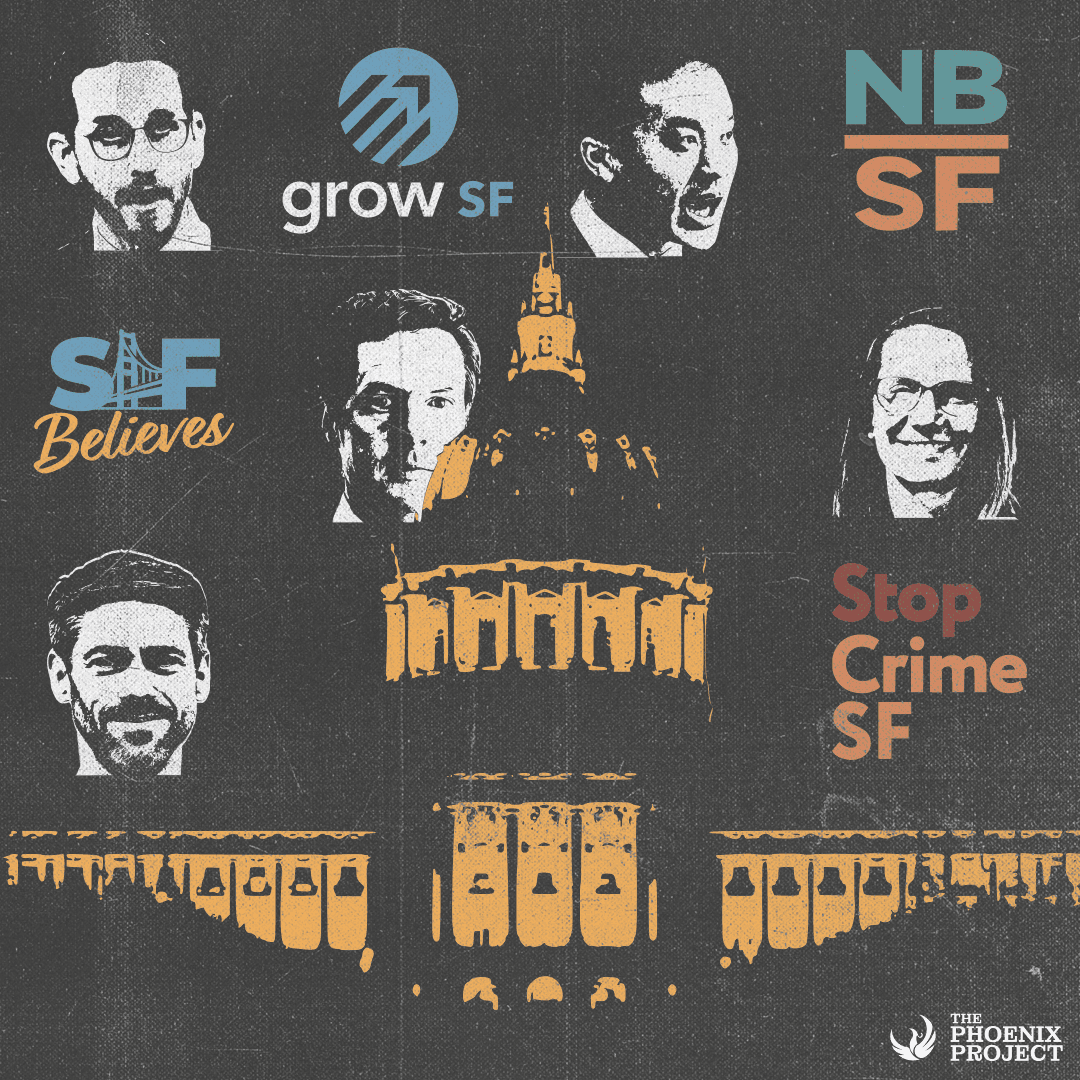
The Astroturf Network has spent big on the June 2026 election, throwing money into most races on the local ballot. Most of the money being raised is being funneled through political action committees to avoid caps that are imposed on individual campaign contributions.
Matt Mahan, San Jose’s mayor and a gubernatorial candidate, has been the biggest beneficiary of its largesse, raking in $15 million in direct donations as well as $25 million from independent expenditure committees.
A former tech executive, many of Mahan’s donors also hail from Silicon Valley including billionaires like Google’s Sergey Brin, tech investor Michael Moritz and Reddit’s Steve Huffman. And yet, Mahan has failed to break out of a crowded field.
Another former tech executive, Ethan Agarwal, is challenging Congressman Ro Khanna in neighboring Silicon Valley. Agarwal has raised nearly $700,000 for the June primary. Among his donors are names that should be familiar to San Franciscans like centimillionaire Garry Tan and billionaire Ron Conway. Despite support from deep-pocketed donors, Agarwal is a longshot.
The Astroturf Network has fared better in the contest to replace retiring Congresswoman Nancy Pelosi. Its favorite, State Senator Scott Wiener, who has raised $3.5 million from individuals and has a handful of political action committees spending on his behalf, is considered the frontrunner in the June primary.
Wiener’s donations come from his longtime allies in the tech and real estate industries. Among his supporters are billionaires Chris Larsen, chair of crypto-currency firm Ripple Labs, and Sam Altman, chief of OpenAI. Wiener will face a November runoff with the candidate who secures second place in the primary.
Two San Francisco supervisorial races have seen especially heavy spending in a bid to retain a conservative majority on the city’s governing board. Alan Wong, Mayor Daniel Lurie’s replacement for recalled District 4 Supervisor Joel Engardio, has collected nearly $1 million in campaign donations. He received $319,000 from a PAC created by GrowSF, the conservative political pressure group co-founded by tech executive Sachin Agarwal and YIMBY stalwart Steve Bacio. Most of the money in GrowSF’s PAC came from Moritz, who contributed $250,000. GrowSF has also spent $11,600 to oppose Wong’s leading opponents.
A PAC started by Lurie’s moneyed friends, SF Believes, has spent $381,000 on behalf of Wong and another $133,000 to bash his opponent, progressive Natalie Gee, the candidate favored by the city’s labor unions. Wong is also backed by the California Alliance of Family-Owned Businesses, an anti-labor PAC.
A staggering $1.4 million has been raised to see Stephen Sherrill elected as District 2 Supervisor. Again, GrowSF and SF Believes have spent big on behalf of a candidate who has been a Lurie loyalist. A pro-Sherrill PAC created by GrowSF has raised $267,000 while SF Believes has spent $201,000 to see him elected. Sherrill’s campaign has been overshadowed by allegations from two former Breed staffers that Sherrill’s appointment was an attempt by the outgoing mayor to secure a post-City Hall job. Sherrill is a Bloomberg protégé.
No surprise that the Astroturf Network is throwing its financial weight behind defeating Proposition D, the so-called Overpaid CEO Tax on San Francisco’s June ballot. The measure, if passed, would tax some companies where the chief executives earn more than 100 times the median salaries of their employees. It would be limited to companies with more than 1000 employees and more than $1 billion in yearly revenue.
The money would go toward closing a deficit that can be blamed on President Donald Trump. San Francisco is facing a two-year, $650 million deficit that promises to devastate city services. According to the City Controller, Prop D would bring in between $250 million to $300 million a year that could go toward mental health programs, public hospitals and emergency response services. Sponsored by a coalition of labor unions, it has been supported by Congresswoman Nancy Pelosi and most members of the Board of Supervisors.
Moritz and Larsen are the leading donors to the effort to defeat Prop D. Moritz has spent $625,000 to fight Prop D while Larsen has poured in $700,000. In the waning weeks of the campaign, Google’s Brin donated $500,000 through an independent expenditure committee to see the measure defeated. Astroturf Network groups GrowSF and Neighbors for a Better San Francisco also oppose Prop D with both spending to support a competing ballot measure Proposition C, which would lower business taxes.
For the school board race, Phil Kim, another Breed appointee, is defending his seat on San Francisco’s Board of Education. Kim is a charter school veteran hired by the city’s school district to shut down campuses, an effort deeply unpopular with public school parents. Kim has received the enthusiastic support of the Astroturf Network including Neighbors for a Better San Francisco which has vowed to spend $1 million to maintain a conservative majority on the School Board, as well as GrowSF.
Neighbors founder, billionaire William Oberndorf, is a longtime advocate for “school choice,” a movement that drains public school coffers to fund schools not subject to district governance. Kim has raised $5,100 in direct contributions. Independent expenditure committees have spent $229,000 to support his campaign, funding advertising including voter guides.
Another down-ballot race has seen a profusion of Astroturf Network spending. Phoebe Maffei, a conservative candidate for Superior Court Judge. Maffei’s supporters include Jeremy Liew, an early investor in Snapchat, who gave $10,000, her largest donation to date. Last year, Liew donated $500,000 to GrowSF and $200,000 to Neighbors for a Better San Francisco.
Maffei has also received an endorsement from Stop Crime SF, a group almost entirely funded by Neighbors for a Better San Francisco. Stop Crime is responsible for a “judicial report card” criticized for using specious data to evaluate local judges.
Through its spending, the Astroturf Network is trying to create a conservative city. The question remains whether regular San Franciscans will stand in the way.