

Phoenix Project
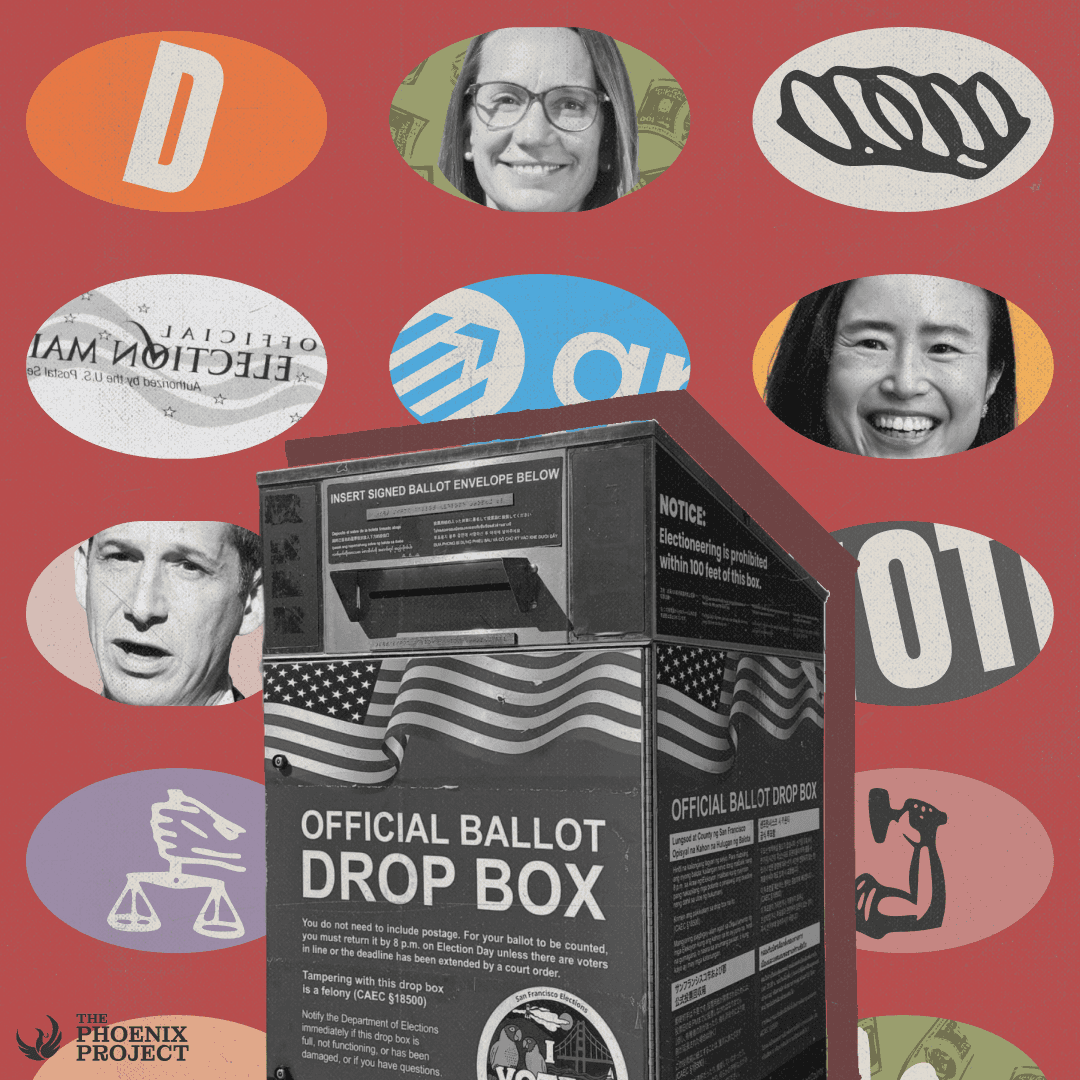
District 1 Supervisor Connie Chan bested a wealthy former tech worker, Saikat Chakrabarti, to take the number-two spot in this week’s primary, sending her into a November runoff against top vote-getter, state Senator Scott Wiener. The contest will determine who replaces retiring Congresswoman Nancy Pelosi. Chakrabarti, largely unknown in San Francisco, spent nearly $9 million, mostly from his own fortune, but was nonetheless handily beaten by Chan, who ran a grassroots campaign.
While many were expecting a very close race for second and an easy first-place finish for Wiener, the margin between Chan and Wiener was nearly identical as that of Chakrabarti and Chan.
Undoubtedly, Chan will face a Wiener campaign awash in Astroturf Network money, especially from independent expenditure committees bankrolled by the tech and real estate industries.
Elsewhere in the Bay Area, progressive Congressman Ro Khanna easily defeated Astroturf Network candidate Ethan Agarwal to retain his seat that represents much of Silicon Valley. Khanna has voiced support for the proposed one-time, 5% tax on the state’s billionaires while Agarwal was an outspoken opponent. Although tech elites like Y Combinator’s Garry Tan hosted fundraisers for Agarwal, he had a scant $300,000 in cash on hand and finished with a paltry 6% of the vote in the June primary.
Big money candidates fared poorly in the governor’s race. San Jose Mayor Matt Mahan, the choice of the Silicon Valley’s tech elite, was drubbed and received a scant 4% of the vote. Outside groups spent more than $30 million to see their favorite elected, but Mahan still finished a distant sixth. Billionaire Tom Steyer, who spent more than $200 million on campaign ads, alone, appears to be headed for a loss. Only the top two candidates — Fox news personality Steve Hilton and former state Attorney General Xavier Becerra — will be up for consideration in November. Steyer said he will not concede the election until every ballot is counted.
One-time Green Party member, former San Francisco Supervisor Jane Kim, was leading in the race to succeed outgoing state Insurance Commissioner Ricardo Lara. Kim, a longtime foe of corporate interests, was neck-in-neck with state Senator Ben Allen of Santa Monica, a centrist Democrat. Another San Franciscan, Astroturf Network candidate Patrick Wolff, a longtime friend of billionaire tech investor and Trump supporter Peter Thiel, was in fifth place after early returns. Jay Cheng, who recently departed Astroturf Network giant Neighbors for a Better San Francisco, ran Wolff’s failed campaign.
Money was the critical factor in citywide races, helped by low voter turnout which traditionally benefits conservatives. Mayor Daniel Lurie and his wealthy allies poured money into local races, flooding social media with ads attacking progressive candidates and ballot measures. Alan Wong, Mayor Lurie’s appointee to replace recalled District 4 Supervisor Joel Engardio, won a decisive victory over a field of candidates including progressive Natalie Gee. Wong raised $394,000 from individual donors and received $580,000 from SF Believes, a political action committee created by Lurie’s wealthy friends. Among its contributors was billionaire MAGA donor Jan Koum who donated $250,000 to the PAC. Wong’s win will allow him to finish Engardio’s term, which ends in November when he must again run to retain his seat.
The race to finish District 2 Supervisor Catherine Stefani’s term, saw similarly obscene spending. Stephen Sherrill, former Mayor London Breed’s appointee to replace Stefani who was elected to the state Assembly, received $1.4 million in contributions, much of it in the form of spending from Lurie-connected PACs. Neighborhood activist Lori Brooke raised a comparatively meager $431,700. Early election results mirrored the lopsided spending with Sherrill receiving 69% of the vote, according to early returns. He won despite allegations that he was tapped for the seat in a bid by outgoing Mayor Breed to curry favor with Sherrill’s mentor, former New York Mayor and mega-billionaire Michael Bloomberg.
Proposition D, the so-called Overpaid CEO Tax that called for taxing companies in which the top executives earn more than 100 times the salaries of their median employees, appeared headed toward defeat. Had it passed, the proceeds would have funded vital services endangered by the city’s budget deficit, much of it resulting from President Donald Trump’s tax cuts.
Prop D was vigorously opposed by Lurie and his allies, including San Francisco billionaires Michael Moritz and Chris Larsen who argued that it would hamper the city’s post-COVID-19 economic recovery. Moritz and Larsen contributed $625,000 and $700,000, respectively, of the $3.2 million raised to defeat it.
Down-measure races saw an influx of money rarely seen in previous elections. Again, the results were predictable: Astroturf Network candidates Phil Kim, an appointee to the San Francisco School Board running to retain his seat, was a big winner as was Phoebe Maffei, a career prosecutor running for Superior Court Judge. Various players in the Astroturf Network donated $150,000 to Maffei, allowing her to outspend her opponent, public defender Alexandra Pray, by a staggering 5-to-1 margin.
Mayor Daniel Lurie, heir to the billion-dollar Levi Strauss fortune, used money to win public office. Once elected, he leveraged his own wealth and to remake the city to reflect the interests of his well-heeled Pacific Heights neighbors. Now, with a compliant Board of Supervisors — and allies in other elected offices — Lurie, should his policies fail, will have no one to blame, but himself.