
Exavier Morrison Wells
Where did San Francisco’s environmental movement go? This seems a rather naive question since concern for the climate is everywhere in the city’s political language. But that saturation conceals a troubling shift. Environmentalism in San Francisco has not been defeated in public debate. Rather, despite the indisputable reality that in the coming decades climate will reshape, literally, the city, it has been hollowed out by a growing consensus that treats any environmental constraint or regulation as an unacceptable cost.
To understand how it happened, it is necessary to be precise about the true core of environmental politics. Environmentalism is not simply the desire for cleaner energy or lower emissions, it is the insistence that development be bound by law, democratic review, scientific reality and enforceable limits. It is, at its core, a politics of restraint, which has become untenable in San Francisco’s current political order.
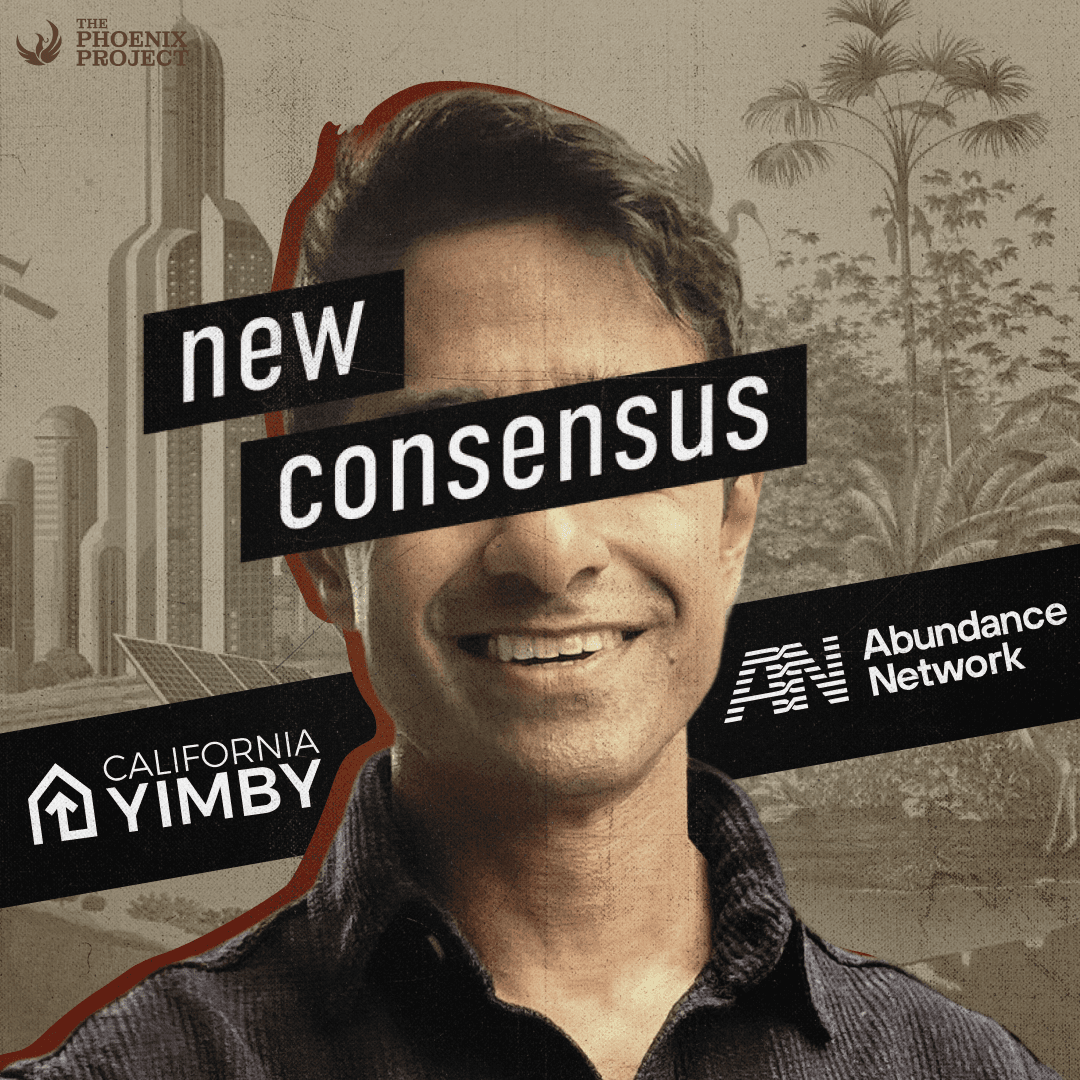
The most instructive place to see this shift is not within the city’s right wing (where hostility to environmental regulation has always been explicit), but within the bloc that takes care to launder itself in progressive language and refer to itself self-righteously as moderate. The clearest case is New Consensus, a national think tank founded by local Congressional candidate Saikat Chakrabarti. The language used by New Consensus echoes that of San Francisco’s YIMBY movement. The city is the birthplace of YIMBYism — recently rebranded as Abundance — and where it has gained the greatest foothold.
New Consensus frames itself as a response to liberal paralysis. It aims to act at the scale and speed demanded by climate collapse. This framing itself is not dishonest. The climate crisis demands radical action. But the political move that follows — the way New Consensus and the abundance “left” defines as an obstacle — is where environmentalism has been pushed out of the room in favor of the politics of making it easier for rich people to make even more money.
New Consensus identifies permitting, siting, and environmental review as the central barriers to decarbonization. The language is predictably intentionally careful, but its conclusions are unmistakable: Environmental regulation is treated not as a fundamental democratic safeguard, but as the central impediment to progress. The illogic of that is tough to miss.
The New Consensus and the YIMBY’s refer to the current environmental regulatory system as “redundant.” The solution offered is not faster review, but consolidated review — a single, streamlined process that will limit public challenges. The space in which community-based environmentalism can operate is constricted as to render it practically useless.
Environmental review has never been ornamental. It is the mechanism by which marginalized communities learn what a project will do to their land, water, air, and health. It is how mitigation is forced, how more efficacious alternatives are considered, how environmental racism can be combated and how projects are sometimes stopped altogether when the detriment of any particular development outweighs its benefits. When New Consensus proposes shortening review timelines, limiting legal challenges, and expanding categorical exemptions, it is narrowing the way in which environmentalism binds development to public consent and the public interest.
The pattern becomes even clearer in New Consensus’s treatment of nuclear energy. Here, the organization drops its initial rhetorical subtlety. It argues that renewable-only pathways impose unacceptable environmental costs, and that large-scale nuclear expansion is therefore necessary. That claim alone is not anti-environmentalist; it is a legitimate position within the climate debate. What follows, however, is revealing. New Consensus asserts that the civilian nuclear regulatory system makes this expansion “practically impossible,” and that changing that system through democratic means is politically infeasible.
Rather than confront political resistance, New Consensus proposes a workaround: Building nuclear infrastructure through military channels, on military bases, using authorities that operate outside the civilian regulatory framework. It proposes invoking emergency powers to bypass what it calls “traditional roadblock” – in other words the democratic process.
This is the logical conclusion of the governing philosophy of the abundance movement. When environmental law stands in the way, the answer is a wholesale abandonment of democratic oversight. When civilian oversight proves inconvenient, the solution is to move the project to a site where oversight does not apply.
This is the point at which New Consensus and the abundance “left” in San Francisco ceases to be meaningfully distinguishable from the technocratic right on environmentalism. The difference is a matter of rhetoric and branding as opposed to structure or outcomes. Where tech elites like Marc Andreessen and Garry Tan express contempt for regulation openly, New Consensus expresses it as impatience and surrounds it with liberal buzzwords. But the intentions are the same: Environmental constraint is treated as an obstacle to be overcome, not a democratic boundary to be respected.
This is how the city’s environmentalism has been strangled. Environmentalists are no longer framed as people defending life, health, and ecology against extraction. They are framed as impediments to action, as people who care more about process than outcomes, as obstacles standing in the way of salvation and who dare refuse to worship at the twin altars of growth and abundance. The core of the environmental movement — that not all growth is good, that urgency does not justify additional harm — has been stripped bare, and replaced by a pro-real estate industry agenda.
So when we ask where San Francisco’s environmental movement went, the answer is not simply that it has disappeared. It has been wholly pushed out. New Consensus and the abundance “left” have not — as is their right — merely disagreed with environmentalists around the edges of policy; they have embraced the right’s framing of environmental constraint as a nonstarter. Instead of seeking to strengthen and enforce environmental regulation, this coalition has dedicated themselves to its destruction. And with their ongoing, but near total, capture of our city’s politics, environmentalism has functionally lost the only thing that ever gave it truly legitimate power: The ability to say no.
Exavier Morrison Wells is a legal fellow at the Phoenix Project, where he investigates how authoritarian systems cloak themselves in law, nonprofits, and procedural legitimacy. He writes about American fascism, political compliance culture, and the slow, quiet collapse of democratic infrastructure. To read more of Exavier’s writings, subscribe to his Substack: Substack.com/@exaviermorrisonwells