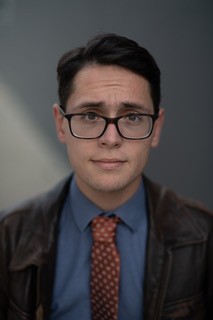
Otto Pippenger

In a few short months, state Senator Scott Wiener may come one step closer to his long-stated goal of replacing Congresswoman Nancy Pelosi and attaining a measure of the power that comes with succeeding a Democratic Party icon.
Recent polling has Wiener leading what is expected to be a close race against Saikat Chakrabarti, a former tech executive who once worked for Congresswoman Alexandria Ocasio-Cortez, and San Francisco Supervisor Connie Chan. A recent entrant, former Trump appointee Marie Hurabiell, is expected to garner little support.
In the race for money, the distance is far greater: Wiener has raised roughly $2.8 million compared to $1.8 million for Chakrabarti (most of it in the form of a personal loan from the candidate himself), and $300,000 for Chan.
What explains the fundraising gap? Wiener is neither wealthy, like Chakrabarti, nor does he have the passionate support of organized labor, like Chan. And unlike his opponents, he is charisma-challenged.
What Wiener has is the staunch support of well-funded YIMBY organizations. YIMBY— short for Yes In My Backyard — is the clever name that disguises a lucrative partnership between the real estate and tech industries.
Most of the $1.5 million raised by Wiener in his first race for state Senate back in 2016 came through independent expenditure committees and were funded by the building trade unions, real estate industry and the police union. Billionaire tech investor Ron Conway was behind an independent expenditure committee that spent more than $173,000 on ads attacking Wiener opponent Jane Kim.
Once elected, he amply rewarded his generous supporters: No one has done more to further the YIMBY cause than Scott Wiener.
In fact, Wiener should be considered the OG of YIMBYism and the Astroturf Network on which it is based. His legislative staffers have gone on to populate lavishly funded YIMBY groups like the Abundant SF, started by tech executive Zack Rosen. Before creating the Abundance Network, Rosen cofounded California YIMBY, composed of wealthy tech executives like himself, in 2017. It is considered one of the first groups formed to push the pro-growth agenda.
Todd David, the architect of Wiener’s first state Senate campaign, is the Abundance Network’s political director; Andres Power, his former land-use policy advisor works alongside David as does Jeff Cretan, his former spokesman. Annie Fryman, his former legislative aide at San Francisco City Hall, works a position at SPUR (a pro-growth think tank) that is directly funded by the Abundance Network, while moonlighting as Abundance’s Senior Policy Advisor.
YIMBY's claim, against compelling evidence to the contrary, is that removing impediments to residential development will solve the state’s housing crisis. They apply Reagan era trickle-down economics to the complex problem of housing. The results are equally dubious: In instance after instance, unfettered development has failed to produce the kind of affordable housing San Francisco — and other California cities — so desperately needs.
Instead, it results in gentrification and displacement, particularly of working-class residents living in rent-controlled housing. Another unfortunate outcome of YIMBYism is environmental degradation since they look upon environmental laws as simply another impediment to building.
A week after being elected to the state Senate, Wiener introduced SB 35, a bill that called for cities that failed to meet state requirements for new housing to hand over the approval processes for new developments to the state. Since 1980, California’s Regional Housing Needs Assessment (RHNA) office has assigned housing goals for each jurisdiction in the state. Wiener wrote a companion bill that changed the RHNA calculation ensuring that no jurisdiction could meet state mandates.
That guaranteed that a state-run approval process would be triggered so that housing approvals would be expedited. It eliminated reviews required by the California Environmental Quality Act. A year later, Wiener’s bill was signed into law by then-Governor Jerry Brown.
It was the first of a series of Wiener bills that wrested planning decisions from cities to the state. We frequently hear YIMBYs tell us that we have to build whatever they want or else the state will take even more control from San Francisco. It is important to understand that did not happen by accident but because his wealthy backers made that happen.
A year later, Wiener authored SB 827, a bill said to have been written by California YIMBY Chief Brian Hanlon. Hanlon is a long-time Wiener association believed to have authored most of the state senator’s housing legislation. SB 827 called for removing height and density restrictions on development sites near transit. It received full-throated support from 150 tech executives, many of whom had donated to Wiener’s campaign for state Senate. It died in committee. Wiener would come back with two similar bills before SB 79 passed and was signed into law.
He was equally relentless in obtaining passage of a statewide upzoning measure, trying five times before ultimately failing. Instead, Wiener settled for passage of SB 9 in 2020, a more reasonable law that allows owners of some single-family homes to create duplexes on their property. However, another successful Wiener bill, SB 478, prevented cities from restricting lot size for upzoning projects.
The indefatigable Wiener has turned his attention to weakening California’s long-standing environmental laws. In 2024, he introduced SB 951, to remove portions of San Francisco from the protection of the state’s Coastal Commission. Despite vocal opposition from environmental groups, the law passed, allowing housing development on land along the city’s coastline. He followed up with SB 607, an overhaul of the California Environmental Quality Act, commonly known as CEQA, to limit environmental review for development projects. For now, CEQA reviews remain largely intact after the bill was significantly amended due to vigorous opposition from environmentalists.
All these measures were on the wishlist of Wiener’s YIMBY supporters. On its website, California YIMBY lists its legislative victories. Most of them are thanks to Scott Wiener, its main man in Sacramento. Now the tech and real estate industries are showing their appreciation by generously funding his long-cherished dream of a seat at the nation’s capitol.
Otto Pippenger is a Sunset District resident, and longtime activist and organizer for progressive causes in San Francisco and the East Bay. When not directly campaigning, he returns to his time as a journalism student, offering unique insights based on his decade of experience in local politics.