

Phoenix Project
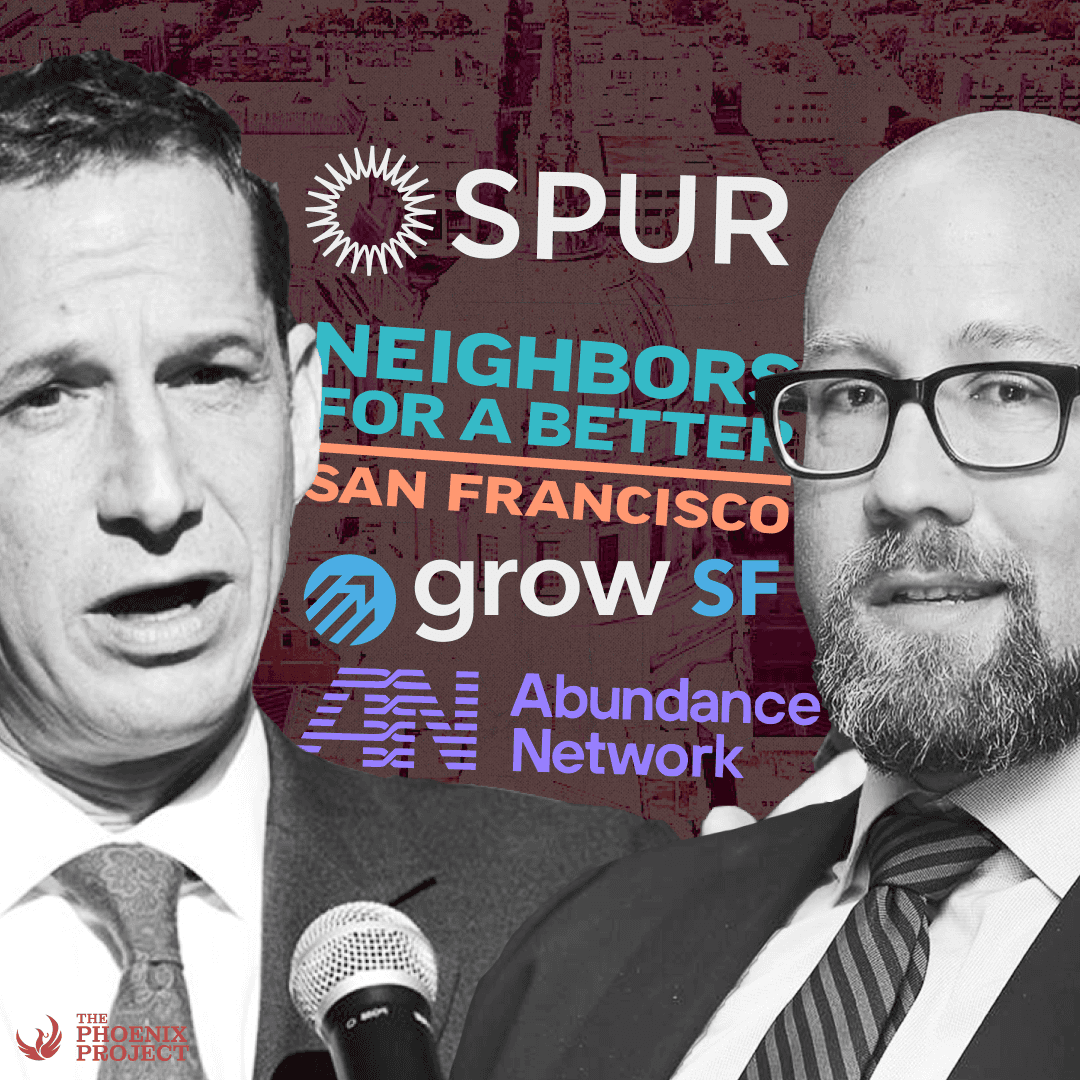
The San Francisco Charter, the 548-page document that serves as the city’s constitution, is getting a rewrite at the behest of Mayor Daniel Lurie. To that end, Lurie and Board of Supervisors President Rafael Mandelman have appointed 31 San Franciscans to review and recommend changes. Revisions will then be brought to the Board of Supervisors who then vote on whether they should be brought before San Francisco voters in the November 2026 ballot.
San Francisco’s first charter was adopted in 1898, creating a strong-mayor form of government. It was revised in 1996 with the passage of Proposition E which handed more power to the mayor in the name of “streamlining” the government.
Today, Lurie, like his predecessors, enjoys extraordinary power when compared to mayors of other California municipalities. A 2013 study from the city’s Local Agency Formation Commission detailed the San Francisco mayor’s clout including the control of more than three-quarters of the city’s budget when compared to the Board of Supervisors and virtually unchecked power over hiring and firing department heads.
However, it should come as no surprise that Lurie, heir to the billion-dollar Levi Strauss fortune, and Mandelman, a candidate for state legislature who has been, of late, wooing wealthy campaign donors, have assembled a group that is heavy on representatives from the real estate and tech industries, and those close to them. They share the belief that governing is best when kept in the hands of wealthy elites.
Among those who have been tapped are Sachin Agarwal of Astroturf Network group GrowSF; Meredith Dodson of the San Francisco Parent Coalition, funded, in large part, by charter school champion William Oberndorf’s Neighbors for a Better San Francisco, and Andres Power of Abundant SF, another Astroturf group with a history of bankrolling right-wing candidates and causes.
Only four members of the Charter Reform Working Group can be said to speak for working San Franciscans: Kim Tavaglione, executive director of the San Francisco Labor Council; Zach Goldman, political director for the local branch of the Service Employees International Union, John Doherty, the business manager of IBEW Local 6 and VP of both the San Francisco Building Trades and Labor Council, and Supervisor Chyanne Chen, a former labor organizer who represents working class District 11. Lurie and Mandelman’s group privileges the voices of the already powerful over those of the regular San Franciscans who find it increasingly difficult to survive in a city that’s becoming increasingly expensive.
Lurie, Mandelman and their wealthy allies aim is to further diminish the role that the average citizen can play in their city’s governance. In 2024, TogetherSF, the now-defunct Astroturf group created by billionaire tech investor Michael Moritz, spent a staggering $9.5 million on Proposition D, a November 2025 ballot measure that would have expanded mayoral power and capped the number of city commissions. It should be noted that commissions present a rare opportunity for San Franciscans to participate in city governance.
Despite TogetherSF’s impressive spending— it donated almost half of the $20 million that went toward the passage of Prop D — the enthusiastic support from the Abundant SF, GrowSF, and Neighbors for a Better San Francisco, and then-mayoral candidate Lurie, the ballot measure failed.
Regardless, charter reform has remained a priority for the Astroturf Network, which has argued for a San Francisco that is run like a corporation rather than the city that it is. Lurie, too, subscribes to the mayor as chief executive model. Among his earliest actions was passage of a Fentanyl Emergency Ordinance which eliminated Board of Supervisor oversight on contracts, and changes to Proposition C, a successful ballot initiative that taxed businesses to fund homeless services and permanent supportive housing — again to reduce board control over spending. He removed Max Carter-Oberstone, an outspoken member of the Police Commission who acted as a check on the long-troubled San Francisco Police Department.
Now Lurie is grasping for more power, looking to SPUR, the San Francisco Bay Area Planning and Urban Research Association, a conservative think tank for inspiration. SPUR was responsible for guiding urban renewal projects in the 1950s and 60s that saw the displacement of a once-thriving Black community in the city’s Fillmore District. Recently, SPUR issued Charter for Change, a scheme that Phoenix Project columnist Exavier Morrison-Wells describes as a scheme “to strip San Francisco governance of democratic friction.”
SPUR proposes what Morrison-Wells calls “unchecked executive rule,” by weakening commissions, and making it far more difficult for initiatives to qualify for the ballot. These changes are proposed in the name of efficiency; what they are is a move toward an authoritarian government.
Democracy is messy. Lurie is again invoking “streamlining” to revise a charter that already grants him significant power. Giving him even more authority will come at the expense of the very people he was elected to govern.