

Lincoln Mitchell
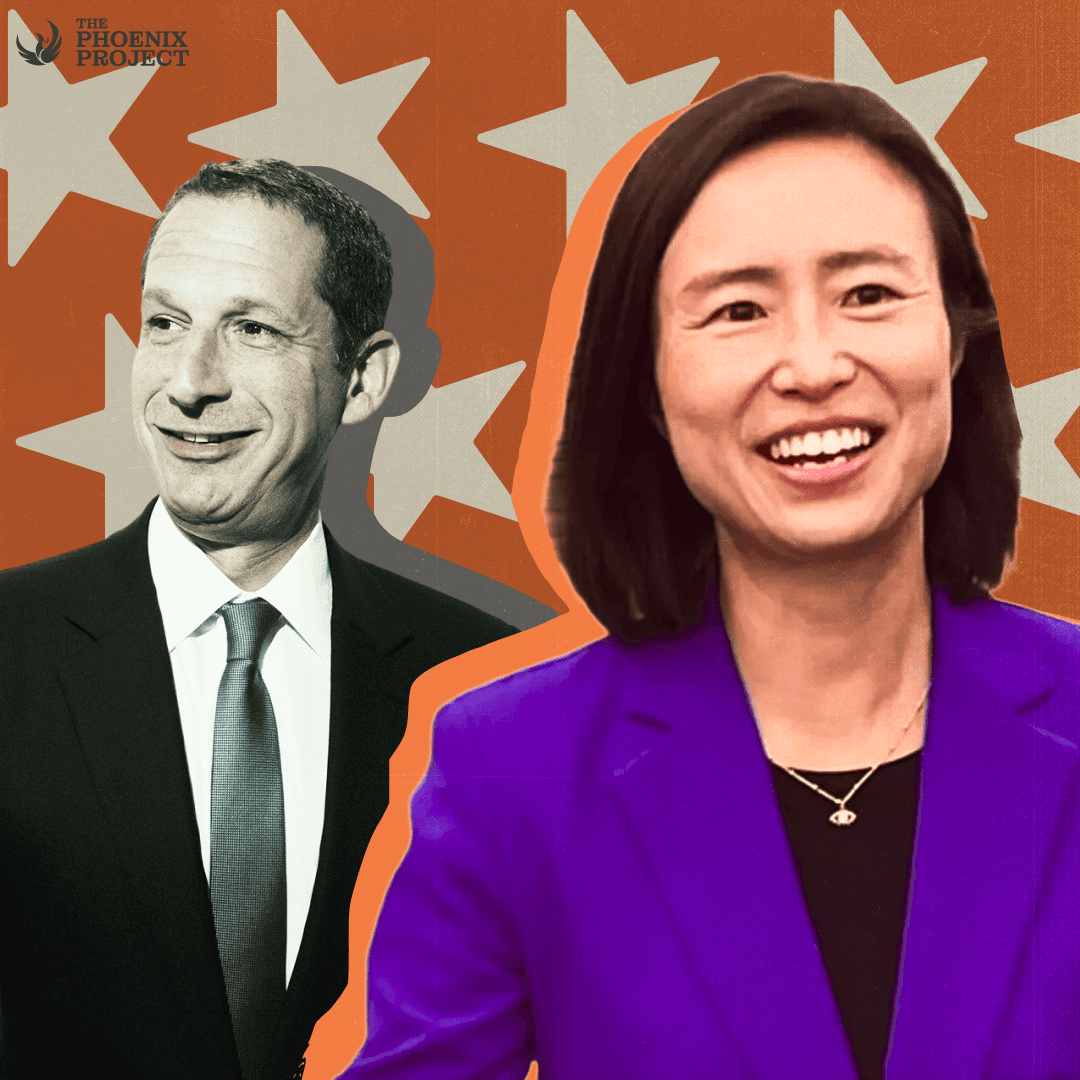
A few weeks ago, many were dismissing Connie Chan’s campaign for Congress. Despite strong support from labor and her own energetic campaigning across San Francisco, few believed Chan’s campaign was gaining momentum, and the smart money appeared to be on either State Senator Scott Wiener, the more conservative alternative to Chan,, running up big numbers in the first round or on Saikat Chakrabarti, an extremely wealthy relative newcomer to San Francisco running a hard-hitting outsider-progressive campaign and securing a spot in the runoff by finishing second.
Chan’s showing was a bright spot in an election that saw enormous spending from the city’s Astroturf Network and, all-too-predictable results. San Francisco’s billionaires poured money into races up and down the ballot. They saw their candidates win, among them Stephen Sherrill, running to retain his supervisorial seat in District 2, Alan Wong, their choice to replace recalled Supervisor Joel Engardio in District 4, Phil Kim, their choice for the School Board, and Phoebe Maffei, their favorite for Superior Court Judge. Spending, and Mayor Daniel Lurie’s opposition, brought down Proposition D, the so-called Overpaid CEO Tax, a ballot measure sponsored by the city’s labor unions.
Then in a matter of what seemed like minutes, everything changed. Nancy Pelosi, whose decision to retire after four decades in Congress had led to this competitive race for an open seat, endorsed Chan. Most observers had long understood that if Pelosi was going to endorse a candidate it would be Chan, but few foresaw such a dramatic and impactful late endorsement. Pelosi’s timing meant that her endorsement would be the story during the final days of the campaign. I rarely make football analogies, but this felt like Joe Montana finding Jerry Rice, or John Taylor and turning the game around in the waning minutes of the Super Bowl.
Pelosi’s endorsement allowed Chan to expand her potential vote base so in addition to her strength among Chinese American voters and competing with Chakrabarti for progressive votes, Chan could also win some votes from more centrist and even conservative voters who admire Pelosi but never cottoned to Wiener. That is precisely what happened. With most of the votes in, Chan finished a strong second with roughly 28.7% of the vote, securing a spot in the runoff.
Despite Chakrabarti’s spirited, and expensive, campaign, he finished a distant third. Chakrabarti ended up spending around $9 million and now sits at 15.5%, or, assuming his vote total doubles when all the votes are counted, which is a generous assumption, about $250 for every vote he received.
Chakrabarti’s campaign was odd in many respects. He ran an outsider campaign against the Democratic Party in a city that has reelected Nancy Pelosi by huge margins for almost two generations. Chakrabarti’s progressive messaging was almost as focused on the Democrats as on MAGA Republicans. Many of his criticisms were not wrong, but were never going to resonate outside of a progressive base, which was always going to be shared with Chan.
He was hurt, in part, by money-fueled attacks by wealthy allies of frontrunner Wiener, a longtime beneficiary of the Astroturf Network’s largess. In addition, Chakrabarti was unable, and almost unwilling, to build beyond his progressive base by offering compelling ideas about affordability, an issue about which Chan spoke relentlessly. The first time candidate who made a fortune in tech before discovering progressive politics, also badly overestimated how progressive San Francisco is. Chakrabarti seemed to think the city was the progressive stronghold Fox and MAGA make it out to be, but that has never been true. In fairness to Chakrabarti, he is relatively new to the city so can be forgiven for making a mistake like that.
Chan will now head to the November runoff against Wiener. Wiener has long been a favorite of the real estate developer and speculator community as well as more conservative tech and corporate money in San Francisco, but has solid credentials on a handful of social and anti-MAGA issues. The national media will see this as a race between two progressives, but this runoff is more accurately understood as the left against the center — or progressives against abundance.
Wiener came in first, but this was not a good showing for the longtime front-runner. His roughly 41.5% of the overall vote, about the same as the Chan and Chakrabarti vote combined, suggests that Wiener, who has been running for this seat, officially or unofficially, for years and is very well-known to San Francisco voters, could be in for a very tough general election fight. Wiener may still win, but his front-runner status was badly damaged on Tuesday, and he needs to find a way to expand his support, as it is now clear that name recognition and financially powerful donors will not be enough to do the trick.
A paradox of the election in San Francisco is that while one of the biggest winners overall was Chan, the progressive stalwart, the other San Francisco politician to have a great night was not even on the ballot. Mayor Daniel Lurie, with whom Chan has sparred quite a bit over the last year and a half, saw both of his preferred candidates for Supervisor, Alan Wong in District Four and Stephen Sherrill in District Two defeat more progressive opponents, while all the local ballot initiatives went Lurie’s way.
Lurie’s successes mean that, other than Chan, the 2026 election has been a big setback for progressive San Francisco. Ironically, if Chan wins in November, Lurie will get a double victory, one of his smartest and ablest opponents on the Board of Supervisors will leave that body and go to Washington, and Lurie will be able to appoint her successor.
To stop Chan, Wiener will need to find a way to make himself more likeable to an electorate that knows him well already and, as we saw on Tuesday, has mixed feelings about him. He will try to do that, in part, by painting Chan as an out-of-touch radical. However, Chan got to the runoff by breaking through to voters who do not usually vote for the progressive candidate. That was due both to Pelosi’s support and Chan’s role as a leader of the city’s Chinese-American community. The map below shows how well Chan did in the heavily Chinese western part of the city-usually a conservative stronghold.
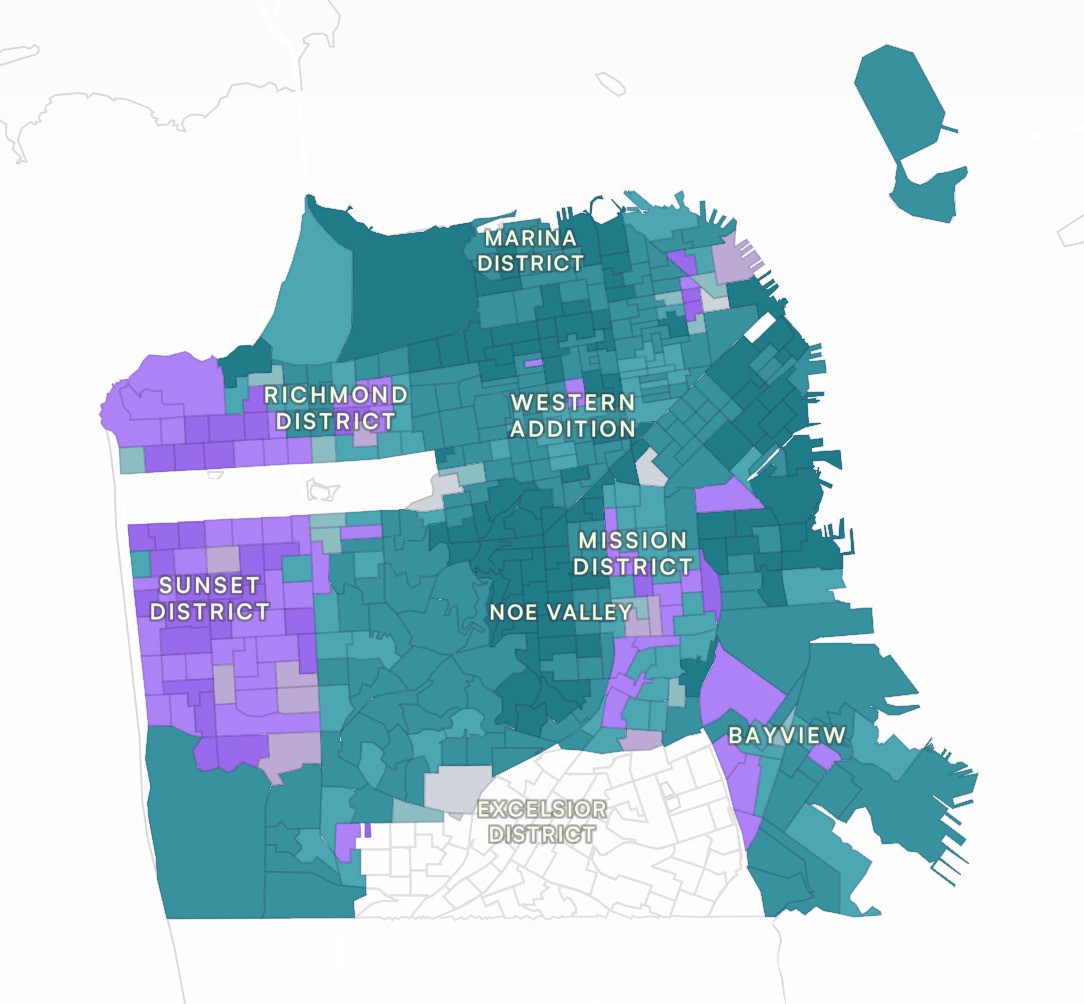
The purple precincts were carried by Chan, the green by Wiener. Chakrabarti did not win any precincts. Map from Election Map SF.
For progressive San Francisco the stakes in the race between Wiener and Chan are extremely high. Given the consolidation of what in other cities would be called conservative power in municipal government, electing a progressive like Chan to Congress is essential for (re)building progressive politics in San Francisco.
Lincoln Mitchell is a native San Franciscan and long-time observer of the city’s political scene. This is an excerpt from an article that was originally published on Mitchell’s Substack, Kibitzing with Lincoln.