
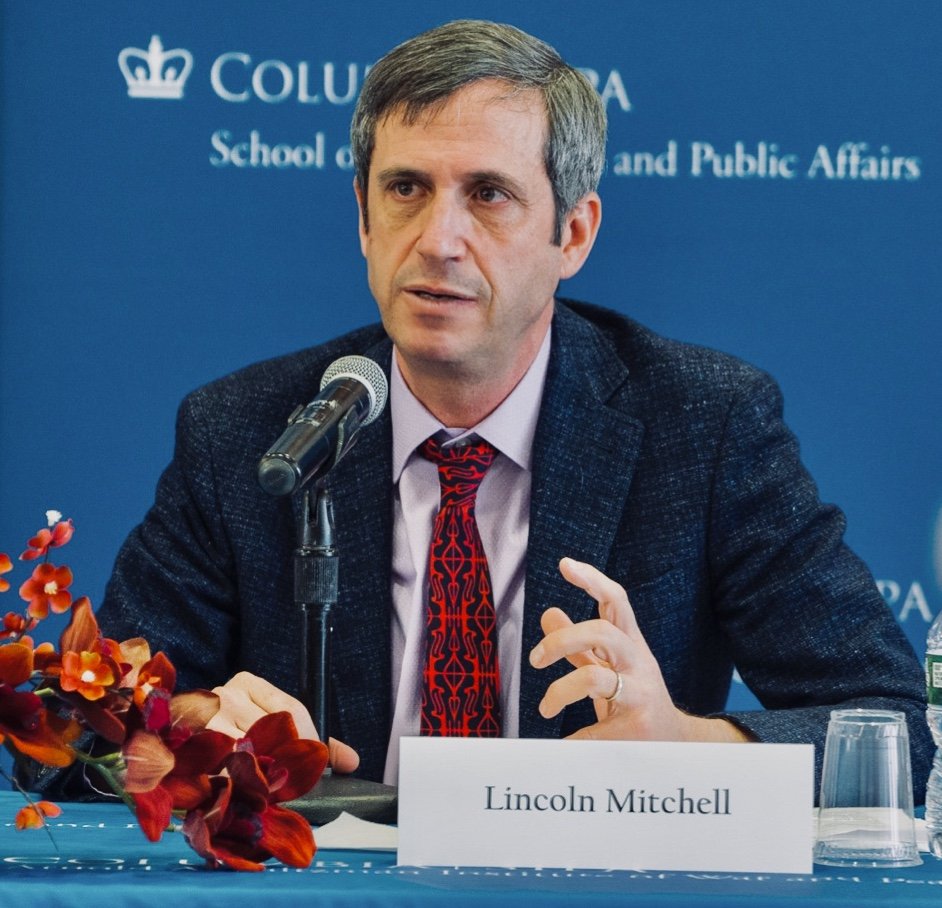
Lincoln Mitchell

The Mayors of New York and San Francisco are having a moment. Advocates for a more conservative approach to urban governance see San Francisco’s Mayor Daniel Lurie as the hope for the future of American cities. Those who believe in a more progressive model for American cities point to New York City’s Mayor Zohran Mamdani as their model.
Mayors Lurie and Mamdani enjoy deep roots in the cities they govern. Both were elected with scant, in the case of Mamdani, or no, in the case of Lurie, political experience. Both are masters of social media, understanding that communications are a big part of the job. Mamdani’s online game allowed him to break through a crowded field while Lurie has used it to claim success for a San Francisco resurgence, one based on the dubious claim that the city was in crisis before he took power. They are popular: Mamdani enjoys a 58% approval rating while Lurie’s is even higher at 74%, in no small part because of social media.
That’s where the similarities end. From the beginnings of their respective campaigns, Mamdani and Lurie emphasized very different issues. Mamdani focused on affordability, a message designed to resonate with working New Yorkers. Lurie ran on tough talk on crime with little visible concern for the economic plight of less affluent San Franciscans. Mamdani funded his campaign primarily through small contributions from individual donors while Lurie looked to his mother, Mimi Haas, heiress to the billion-dollar Levi Strauss fortune, to bankroll his way to City Hall.
However, the greatest difference between these mayors is in their priorities. Mamdani has yet to deliver with some of the big promises — New Yorkers don’t have free buses or city-run grocery stores. That said, he has frozen rent on nearly 1 million rent-controlled apartments, and called for building and preserving hundreds of thousands of affordable homes through his Block-by-Block plan. Mamdani launched the Rental Ripoff Report to crack down on bad landlords, strengthen renter protections and recognize tenant unions. He has shown a deep understanding of the strains that the affordability crisis has brought upon the most vulnerable New Yorkers, expanding the amount of permanent supportive housing through a revived Just Home program. An estimated 2000 homeless were moved into shelters during his first weeks in office.
Mamdani has also taken less visible — but nevertheless significant — steps toward making New York more affordable. He forced DoorDash and other delivery services to change their apps so tips would go directly to drivers. He paid people $30 an hour to shovel snow during winter blizzards. These may seem like small things, but they represent progress towards a more affordable New York that focuses more on the needs of working people.
San Francisco suffers from the same acute affordability problem as New York. Meanwhile, Lurie has enriched real estate developers and speculators at the expense of working San Franciscan while the city experienced a 12.2% increase in rents last year alone, making the average cost of a one-bedroom apartment about $4,000 a month.
Lurie opposes freezing rents or expanding rent control. He attempted to kill a transfer tax on real estate transactions of more than $10 million that funds affordable and social housing. He has been a vocal opponent of Proposition I, a November 2026 ballot measure that prevents money from being used for other purposes. His housing plan, signed into law earlier this year, has made it cheaper for developers to build market-rate housing. He recently reduced the percentage of affordable housing that must be included in any new development from 15% to 5%.
As many San Franciscans struggle, Lurie cut services for the city’s neediest. Money was clawed back by the Board of Supervisors, notably District 1 Supervisor Connie Chan who served as the chair of its Budget Committee. As more San Franciscans have been evicted from their homes, the Mayor has made it harder for them to find shelter. San Francisco is projected to add only 303 shelter beds by 2028 and he has required sobriety for new city-funded permanent supportive housing, a reversal of the long-successful Housing First policies that have been data-backed as best practices for dealing with homelessness for decades. He has imposed a citywide ban on RVs that will see the more than 1,400 living in their vehicles forced out of their homes.
Central to their priorities are Mamdani’s and Lurie’s relationships with their wealthiest constituents. Mamdani has taxed the rich, implementing the Pied-a-Terre Tax on some New York homes worth more than $5 million. He has advocated for closing a tax break that disproportionately benefits millionaires. Together, those measures would raise more than $500 million from those who can most afford it, money that will be a stable source of revenue for vital public services.
Lurie has been loath to make the city’s wealthiest pay their fair share. He became the face for the opposition to Proposition D, the Overpaid CEO Tax on the June 2026 ballot which levied a modest tax on companies (of at least 1000 employees) where the chief executive is paid more than 100 times the median salary of its workers. Lurie sided with the billionaires, including crypto chief Chris Larsen, who have a long history of vehemently fighting any incursion into their vast wealth. Had it passed, it would have raised a desperately needed $300 million a year for city services.
Instead, Lurie has hoped to pay for services by asking wealthy individuals and corporations to contribute, exposing the city to their whims and creating a notoriously unsteady source of funding. Recently, the Mayor’s scheme hit a snag when he was rebuffed by OpenAI’s Chief Financial Officer Sarah Friar. OpenAI, and other artificial intelligence startups, have been blamed for the recent surge in rental prices and the industry has been cited as the culprit for widespread layoffs as companies adopt the technology.
OpenAI is anticipated to raise as much as $1 trillion on an initial public offering expected early next year. Despite Mayor Lurie’s cajoling, it seems that little of it will go toward supporting San Francisco.
Lincoln Mitchell is a native San Franciscan and long-time observer of the city’s political scene. Read more of his work at Kibitzing with Lincoln.